

The Armando Álvarez Group is one of Spain’s leading industrial groups. It began as a forestry company in the 1950s and has evolved today into a multinational company with more than 2,500 employees and operations in over 100 countries. It has been able to successfully combine family tradition with a strong capacity for expansion and diversification. Its activities range from producing plastics and industrial packaging to logistics, energy, the hospitality industry and more.
This being said, even in the most well-established companies, technological challenges are critical to a corporation´s continued evolution.
The Challenge: A Legacy Architecture That Was Hindering Maintenance and Evolution
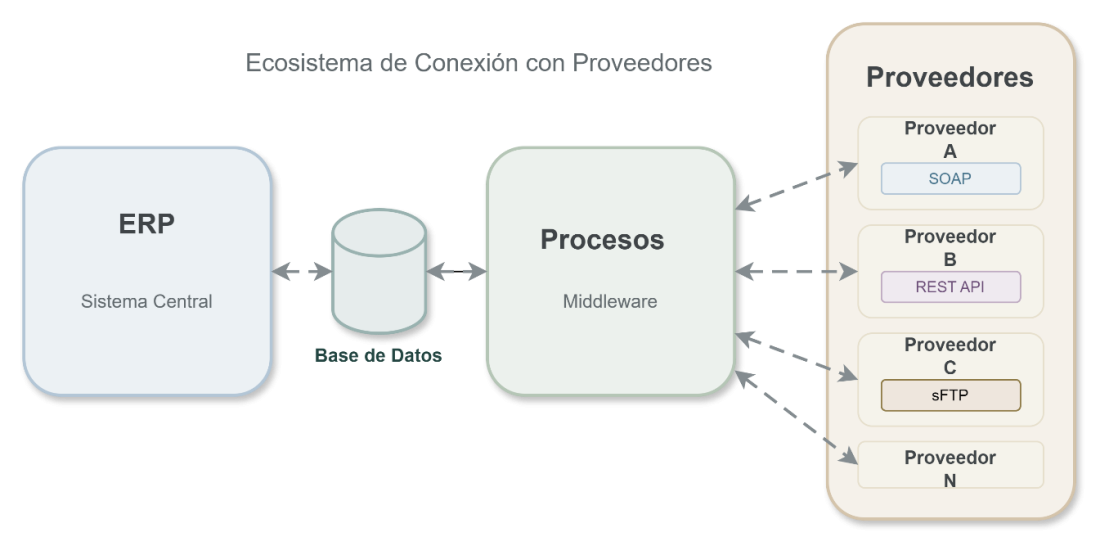
The group faced numerous modernization challenges. Chief among which was modernizing a key process present in its day-to-day activities: Managing the integration with suppliers, which directly impacted its ERP system.
- High risk associated with any system modification.
- Critical dependence on existing code and libraries that were difficult to maintain and understand.
In an industrial environment where agility and integration capability make all the difference regarding competitiveness, the company had to take action. The technology that was out there presented opportunities for advancement; both in terms of architecture and documentation, which required a flexibility and a deep understanding of the existing system.
Thanks to Armando Alvarez´s collaboration with the CIC team, a modern, robust and scalable solution was designed and implemented, thus enabling the group to become more efficient and put in place a sustainable integration model aligned with its strategic objectives.
The Solution: A Controlled Transition and Technical Redesign
Acknowledging deficiencies in a critical and poorly documented system requires technical exactness, a strategic vision and a clear roadmap.
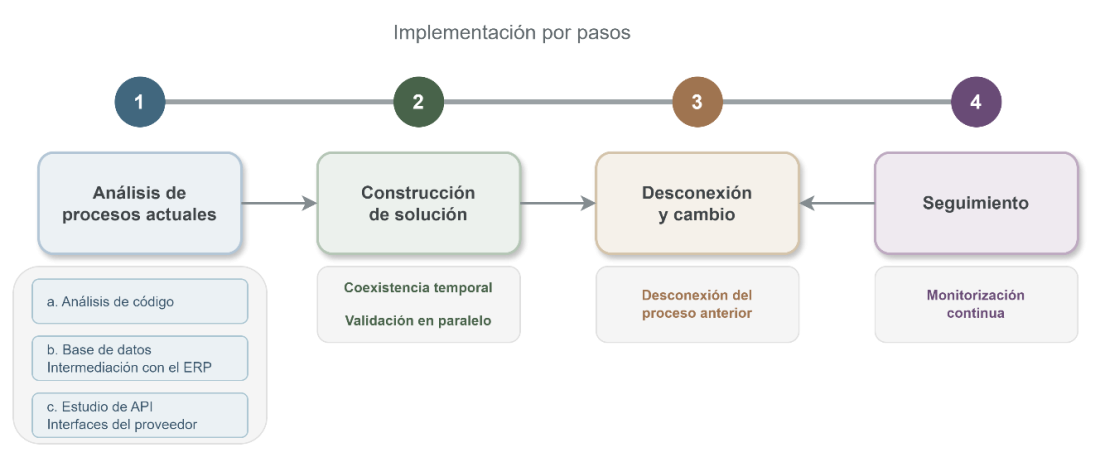
Therefore, the Armando Álvarez Group and CIC Consulting Informático teams joined forces to design a structured and phased down approach focused on minimizing risk, ensuring traceability and building confidence at every step in the process:
- In-depth analysis of the existing system, detecting its operation through the code itself, intermediary databases and the supplier’s available APIs.
- Design and implementation of a new integration architecture capable of coexisting with the legacy system during an initial parallel validation phase.
- Gradual disconnection of the legacy environment and controlled transition to the new system.
- Post-deployment monitoring to ensure stability, identify potential adjustments and strengthen internal information.
The Results: Security, Autonomy and Evolution
The transformation has had a positive direct impact on operations. The Armando Álvarez Group has evolved technologically.
Main Advantages:
- Greater security and traceability, as a result of a modern, well-documented and robust technology stack.
- Reduced intervention risk, as the new environment is coherent, logical, maintainable and is no longer dependent on an opaque legacy code.
- Client´s technical autonomy, has full control of how its integrations work.
- Scalability and adaptability, with an architecture designed to easily incorporate new suppliers or adapt existing workflows.
Furthermore, the temporary coexistence of both systems made it possible to validate the new model without interruptions or negative impacts on critical processes, establishing trust and confidence throughout the transition period.
Conclusion
Furthermore, the temporary coexistence of both systems made it possible to validate the new model without interruptions or negative impacts on critical processes, establishing trust and confidence throughout the transition period.
In the digital transformation era, evolution does not always mean starting from scratch. It does, however, require a thorough analysis of what is already in place, building on the solid foundations that are functioning and moving forward with a long-term vision.